

Introduction
In the arid landscape of the UAE, where rainfall is scarce and evaporation relentless, the ability to harness water has always been the difference between mere survival and the flourishing of civilization. The most significant innovation to achieve this was the falaj (plural: aflaj), a gravity-fed irrigation system that transformed the desert into a cradle of agriculture and sustained settled life for millennia. Dating back to the beginning of the Iron Age (around 1000 BCE), the aflaj are a masterpiece of prehistoric engineering and a testament to the deep understanding the ancient inhabitants had of their environment. This article explores the origins, mechanics, and profound social impact of this system, which not only watered crops but also laid the hydrological and social foundations for the oasis cities of the UAE.
Engineering Marvel: The Anatomy of a Falaj System
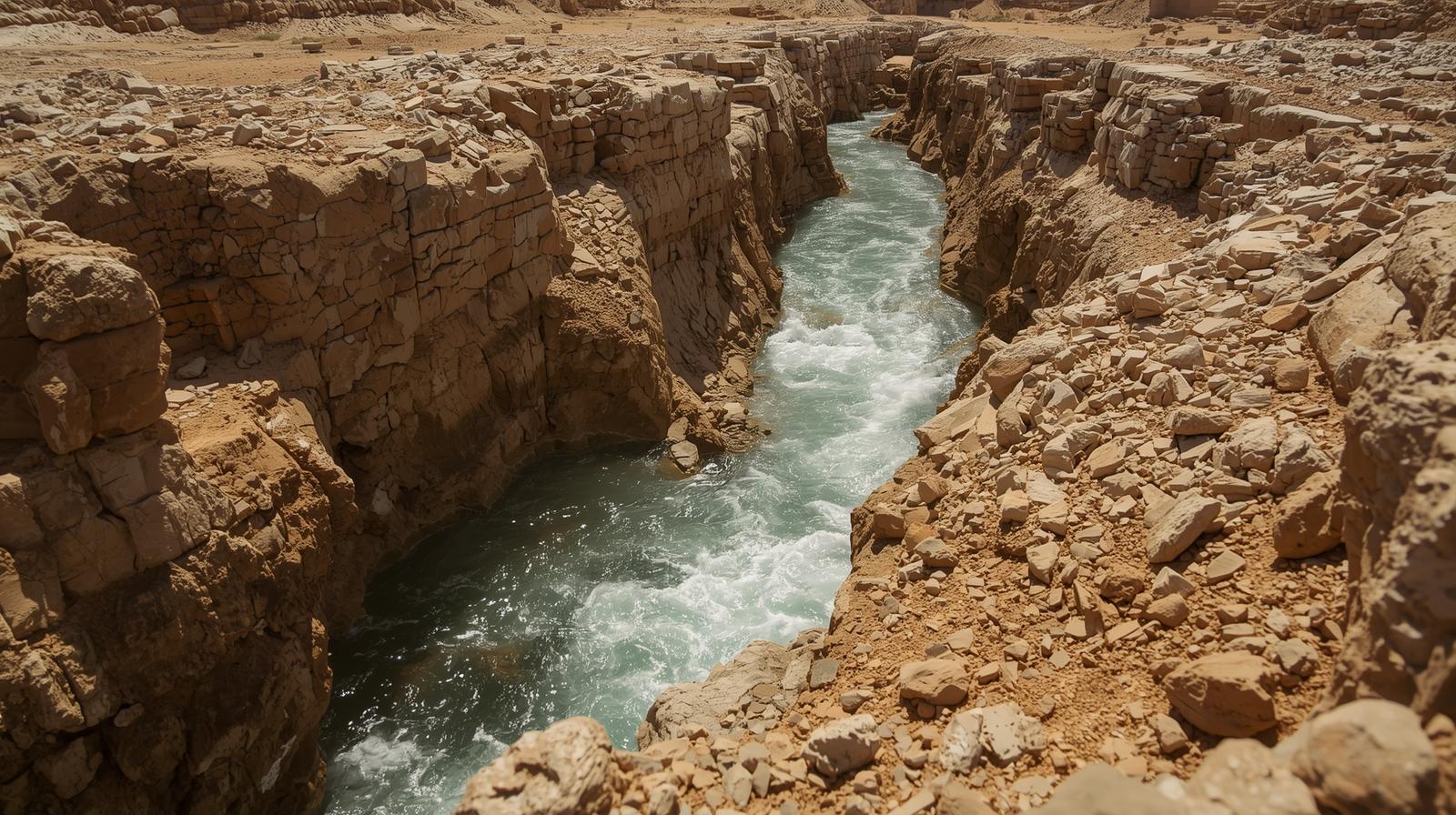
A falaj is not simply a well; it is a complex and sophisticated network for capturing and transporting water. The system typically begins with a mother well (umm al falaj), dug deep into an aquifer, often at the foot of a mountain range where groundwater is naturally replenished. From this source, a gently sloping underground tunnel is constructed, sometimes stretching for kilometers, to channel the water by gravity to the areas where it is needed. At regular intervals, vertical access shafts (thuqboor) are dug down to the tunnel. These shafts served a dual purpose: they provided ventilation and access for the original diggers to remove spoil and for subsequent maintenance crews to clear blockages. The water finally emerges at ground level into an open channel, which distributes it to the farms, date palm gardens, and settlements of the oasis.
Origins and Antiquity: A Technology of Empire and Adaptation
The technology of the falaj is believed to have originated in ancient Persia (where it is known as a qanat), and its introduction to Eastern Arabia around 1000 BCE marks a period of significant technological and social change, known as the Iron Age. Its adoption was revolutionary. It allowed communities to settle far from the immediate vicinity of natural springs or surface water, enabling the large-scale and predictable cultivation of date palms, cereals, and fruits. Archaeological evidence, including carbonized date stones and grain samples from sites like Al Ain’s Hili oasis, confirms the agricultural boom that followed the introduction of the aflaj. This was not a borrowed technology used without change; the people of the region adapted it perfectly to their specific geography, creating a network that would define life in the interior for the next 3,000 years.
The Social Code of Water: Distribution and Community Governance
The falaj was more than an engineering feat; it was a social institution. The management and distribution of its precious water required a sophisticated and equitable system of governance. The water flow was meticulously measured using time-based units, often with a sundial or water clock. A designated water distributor, the arif al falaj, was responsible for allocating specific time slots to each farmer according to the size of their land and their water rights. This allocation was a form of property law, and disputes were settled by community elders. The shared reliance on the falaj fostered a strong sense of communal responsibility and cooperation. Maintaining the tunnels was a collective duty, and the entire community had a vested interest in its smooth operation, weaving the falaj into the very social fabric of the oasis.
A Living Legacy: The Falaj in the Modern UAE
The importance of the aflaj did not diminish with time; it remained the backbone of oasis agriculture until the late 20th century. While modern desalination plants now provide the UAE’s water, the historical and cultural significance of the aflaj is immense. The Al Ain Oasis, a UNESCO World Heritage Site, is a living museum of this technology, where some channels still carry water to the palm groves. The UAE government has undertaken extensive conservation projects to restore and preserve these ancient systems, recognizing them as monuments to human ingenuity. They stand as a powerful reminder of a time when survival depended not on fossil fuels or advanced technology, but on a deep, sustainable understanding of the land and the ability to work together for the common good.
Conclusion: The Flow of History
The falaj is the unsung hero of Emirati history. It was the catalyst that enabled the transition from a nomadic, pastoral lifestyle to a settled, agricultural society. It supported the growth of the population, the development of crafts, and the stability required for trade and cultural development. The values it instilled—cooperation, fairness, and meticulous resource management—are deeply embedded in the Emirati character. In the gentle, continuous flow of water through the ancient tunnels of the falaj, one can hear the steady pulse of a civilization that learned not just to survive in the desert, but to make it bloom.