

Introduction
In the heart of the Sharjah desert, the archaeological site of Mleiha presents a unique palimpsest of history, where layers of time tell a story spanning hundreds of millions of years. While famous for its dinosaur fossils, Mleiha’s greater significance lies in its role as a powerful and prosperous center during the pre-Islamic era, from the 3rd century BCE to the 3rd century CE. Often described as the “capital” of the interior, Mleiha was a nexus of caravan routes, a hub of agriculture and industry, and the seat of local rulers who amassed considerable wealth and influence. The ongoing discoveries at Mleiha are fundamentally reshaping our understanding of the UAE’s past, revealing a dynamic and complex society that mastered the challenges of the desert interior.
From Prehistory to Power: The Rise of an Oasis City
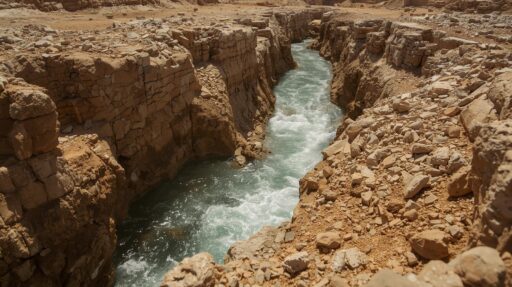
Mleiha’s location was strategically chosen. It was situated at a vital crossroads where caravan routes from the Arabian Gulf coast met trails leading into the vast Empty Quarter and onward to the Oman Gulf. More importantly, it was a fertile oasis, supported by groundwater that allowed for extensive date palm cultivation and agriculture. The site’s rise to prominence began in the Late Pre-Islamic period, following the decline of coastal centers like Ed-Dur. Mleiha filled the power vacuum, becoming the dominant political and economic force in the region. Its inhabitants built fortified structures, developed a local coinage, and engaged in trade on an impressive scale.
The Mleiha Fort and Royal Power: Evidence of Centralized Authority
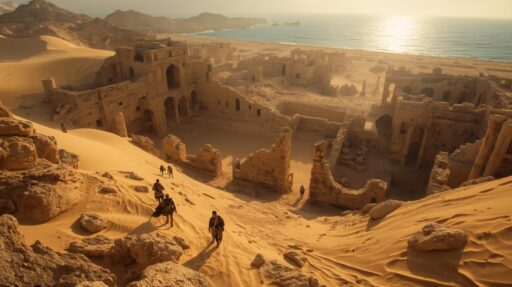
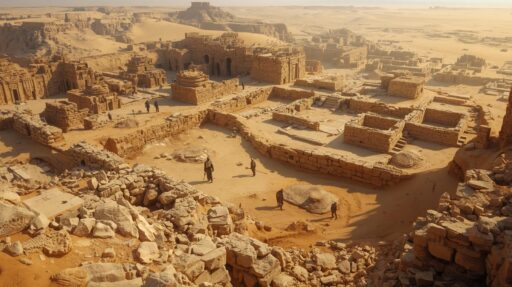
The most striking structure at Mleiha is the remains of a large, square fortified building, known as the Mleiha Fort or the “Umm al-Mal” (Mother of Wealth) building. This was not a military fortress in the traditional sense but likely a palatial residence and administrative center for the ruling elite. Its imposing size and sophisticated architecture, with square towers at the corners, speak of concentrated power and wealth. The discovery of a rich, undisturbed royal tomb nearby, containing gold jewelry, imported glass, and weaponry, confirms the existence of a powerful ruling dynasty that controlled the trade and resources of the region, projecting their authority from this desert capital.
A Diversified Economy: Trade, Agriculture, and Iron Smelting
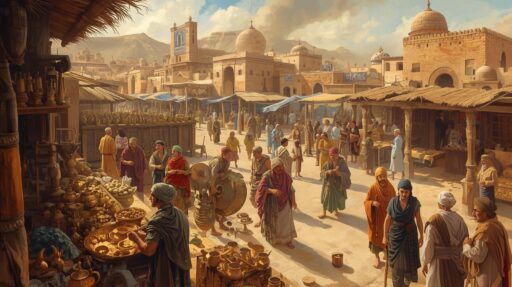
Mleiha’s economy was remarkably diversified. As a caravan station, it facilitated the trade of goods like incense, spices, and textiles. Archaeological finds include luxury items from the Greco-Roman world, India, and South Arabia, demonstrating the reach of its commercial networks. But Mleiha was also a major industrial center. Archaeologists have uncovered extensive evidence of iron smelting, with large slag heaps and the remains of furnaces. This indicates that Mleiha was not just a passive trader but a producer of valuable metal tools and weapons. Combined with its agricultural base, this industrial capacity made Mleiha a self-sufficient and economically resilient power in the heart of the desert.
Funerary Monuments and Beliefs: The Mleiha Grand Tomb
The people of Mleiha left behind impressive funerary monuments that reflect their wealth and beliefs. The most famous is the Mleiha Grand Tomb, a massive, circular above-ground structure with a corbelled dome, reminiscent of earlier Bronze Age tombs but on a grander scale. This was a collective burial place for an elite family. Other tombs, including the unique “Camel Tomb,” showcase the diversity of burial practices. These structures, often located on high ground, were visible markers of lineage and social status, reinforcing the authority of the ruling class in death as in life. The grave goods found within, such as bronze vessels and alabaster jars, point to a belief in an afterlife and the practice of equipping the dead for their journey.
Conclusion: The Lost Capital of the Interior
The story of Mleiha is a crucial corrective to a history that has often been overly focused on the coast. It reveals that the interior was not a cultural backwater but the seat of powerful, innovative, and sophisticated societies. Mleiha was a desert kingdom that thrived through its control of trade routes, its agricultural ingenuity, and its industrial prowess. Its eventual decline around the 3rd century CE, like Ed-Dur, remains partly mysterious, but its legacy is secure. The Mleiha Archaeological Centre now protects and interprets this incredible site, allowing visitors to walk among the ruins of a once-great city and understand that the deserts of the UAE have always been a landscape of opportunity, innovation, and ancient grandeur.