

Introduction
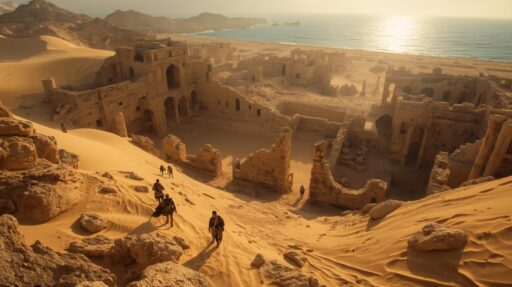
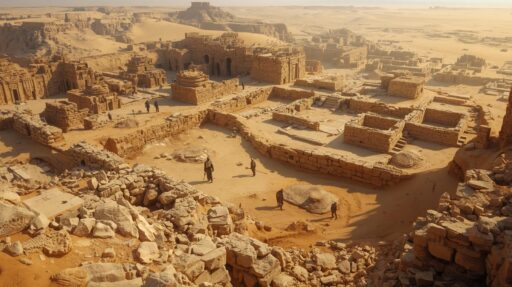
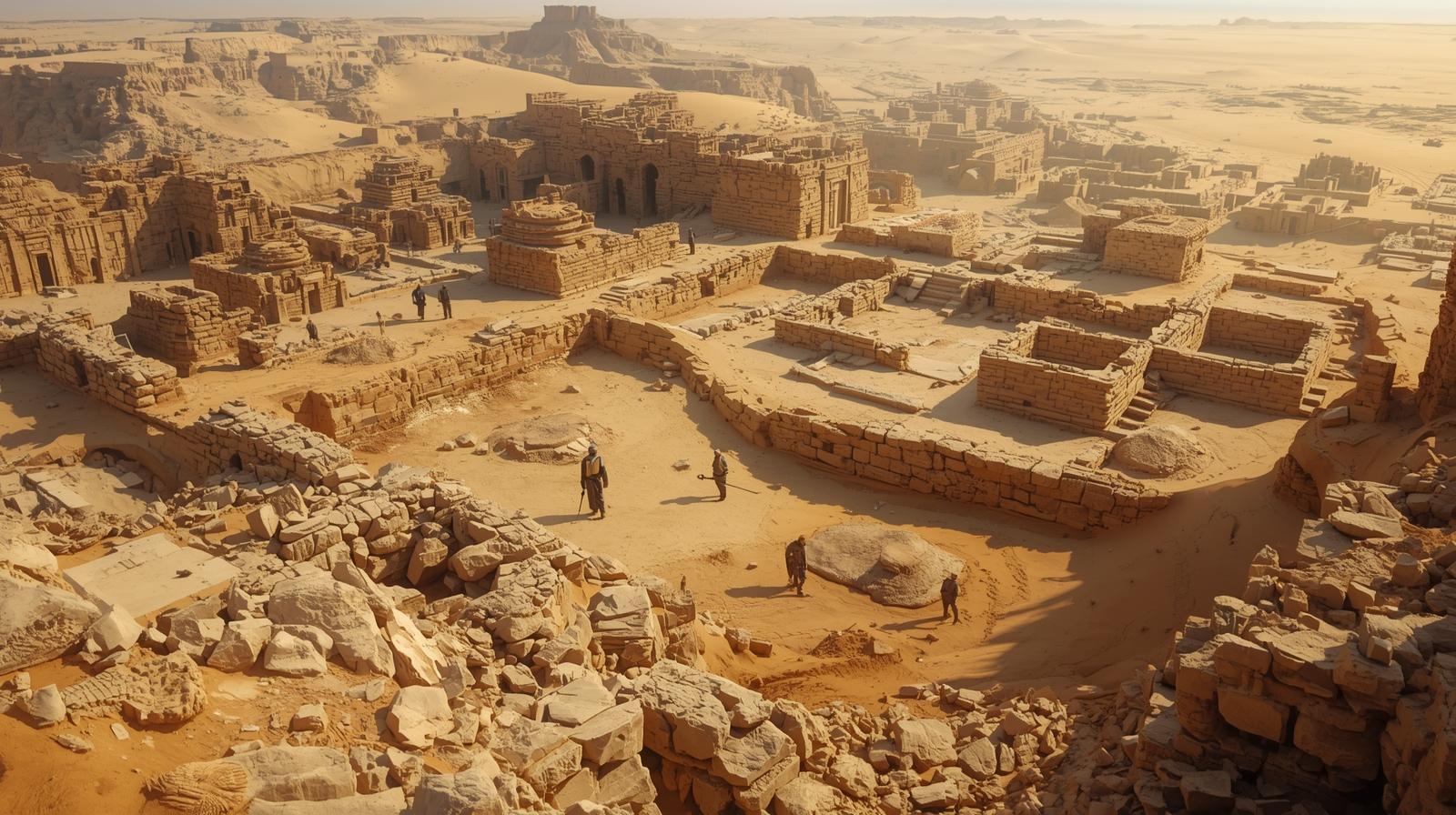
On the windswept coast of Umm Al Quwain, hidden among sand dunes and overlooking the waters of the Arabian Gulf, lie the silent ruins of Ed-Dur, “the houses” in Arabic. This sprawling site, one of the largest and most important archaeological locations in the UAE, was once a thriving port city and a bustling hub of international trade during the first centuries CE. A contemporary of the Roman Empire, Ed-Dur represents a pivotal yet often overlooked chapter in the region’s history—a period after the decline of the great Bronze Age cultures and before the rise of Islam. The ongoing excavations at Ed-Dur are gradually piecing together the story of a sophisticated, multicultural society that played a crucial role in the trade networks linking the Mediterranean, India, and the Arabian Peninsula.
A Cosmopolitan Trading Hub: Evidence from Afar
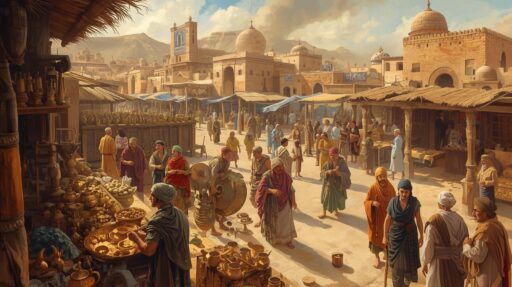
The wealth and significance of Ed-Dur are demonstrated by the vast quantity of imported goods unearthed by archaeologists. The most striking finds are the countless fragments of beautiful glassware and pottery from the Roman Empire, including amphorae that once held wine and olive oil from Italy and Greece. Terracotta figures from Mesopotamia and charred wood from India speak of a port that welcomed merchants from across the ancient world. But Ed-Dur was not merely a passive consumer of foreign luxuries; it was a producer and exporter. The inhabitants were skilled in metalworking, and the site has yielded evidence of large-scale copper and bronze smelting. It is believed that Ed-Dur’s primary export was dried fish and pearls from the Gulf, commodities that were highly valued in the Roman world.
Religious Life and Syncretism: Temples and Deities
The religious life of Ed-Dur’s inhabitants reveals a fascinating blend of local and foreign beliefs. A small, square temple dedicated to the sun god, Shams, has been discovered at the site. This was a purely Semitic deity, worshipped across Arabia. However, a far more spectacular find was a large, carved stone relief depicting a cherub-like figure holding a jar of sacred water. This image is a direct import from the Aramaic-Parthian world to the north. Most significantly, several altars were discovered inscribed with the name of a mysterious deity, “Shmn,” suggesting a organized and formalized religious practice. This blend of local Arab gods with influences from the wider Hellenized and Semitic world paints a picture of a tolerant and cosmopolitan society.
The Mystery of the Inhabitants: Who Lived at Ed-Dur?
A key question surrounding Ed-Dur is the identity of its people. While no written records from the city itself have been found, historians and archaeologists have pieced together clues. The most widely accepted theory is that Ed-Dur was a major settlement of the Kingdom of Characene, a vassal state of the Parthian Empire that controlled the northern end of the Gulf and its trade. The material culture—the pottery, the religious iconography, and the architecture—strongly supports this connection. The people were likely a mix of local Arab tribes and merchants from the Parthian world, living together in a prosperous, stratified society governed by trade and a shared economic interest.
Architecture and Daily Life: A City of Stone and Mudbrick
The remains at Ed-Dur show a city built for both permanence and commerce. The most prominent structure is a large, fortified building, possibly a castle or an administrative center, constructed from local beach rock. Surrounding it are the remains of dozens of residential buildings, tombs, and industrial areas for metalworking. The inhabitants lived in houses made of stone foundations and mudbrick walls, and they buried their dead in above-ground, collective tombs similar to those from the earlier Umm an-Nar period, but with a different architectural style. The sheer size of the site, estimated at around five square kilometers, indicates a substantial population that was engaged in a diverse range of activities, from fishing and farming to skilled craftsmanship and long-distance commerce.
Conclusion: A Bridge Between Eras
The story of Ed-Dur is crucial because it fills a significant gap in the historical narrative of the UAE. It demonstrates that the region did not enter a “dark age” after the Bronze Age but instead transitioned into a new era of economic and cultural vitality centered on maritime trade. Ed-Dur’s success was based on the same geographic advantages that would later fuel the growth of Dubai and Abu Dhabi: a strategic location on global trade routes. The city’s eventual abandonment around the 4th century CE, possibly due to shifting trade patterns or the silting up of its harbor, closed one chapter. But the legacy of Ed-Dur lives on, proving that the lands of the UAE have been a crossroads of civilization for two thousand years, long before the discovery of oil or the birth of the modern federation.